Physical Address
304 North Cardinal St.
Dorchester Center, MA 02124
Physical Address
304 North Cardinal St.
Dorchester Center, MA 02124

Get the truth on knee replacement pain, recovery, and risks—myths shattered, facts revealed; how hard is it really?
You’ve heard knee replacement is brutal or magical—neither’s true. It’s a resurfacing, not a bionic upgrade, built to cut pain and get you walking, stairs, life. Modern implants last decades; rehab and smart pain control do the heavy lifting. Risks? Real but uncommon when you’re optimized and moving early. You won’t outrun your grandkids—yet—but you’ll likely keep up. Curious about timelines, who’s a fit, and what recovery really feels like?
While “knee replacement” sounds like swapping out your whole joint for a bionic gadget, it’s really a resurfacing procedure: surgeons remove damaged cartilage and a thin layer of bone, then cap those surfaces with smooth metal and durable plastic so the joint glides again. You keep your knee, its shape, its muscle and tendon system. The goal isn’t superhuman power; it’s steady, pain‑reduced motion for walking, stairs, even light hikes. Think of it like re-treading a tire, not rebuilding the car.
What it isn’t: a fix for every ache, a shortcut around rehab, or a guarantee you’ll run marathons. It won’t reverse arthritis elsewhere, and it won’t cure weak hips or a stiff back that also limit you. You’ll still need to strengthen, stretch, and mind your balance. Expect hospital or outpatient care, movement the same day, and a home setup—clear walkways and a sturdy chair with arms.
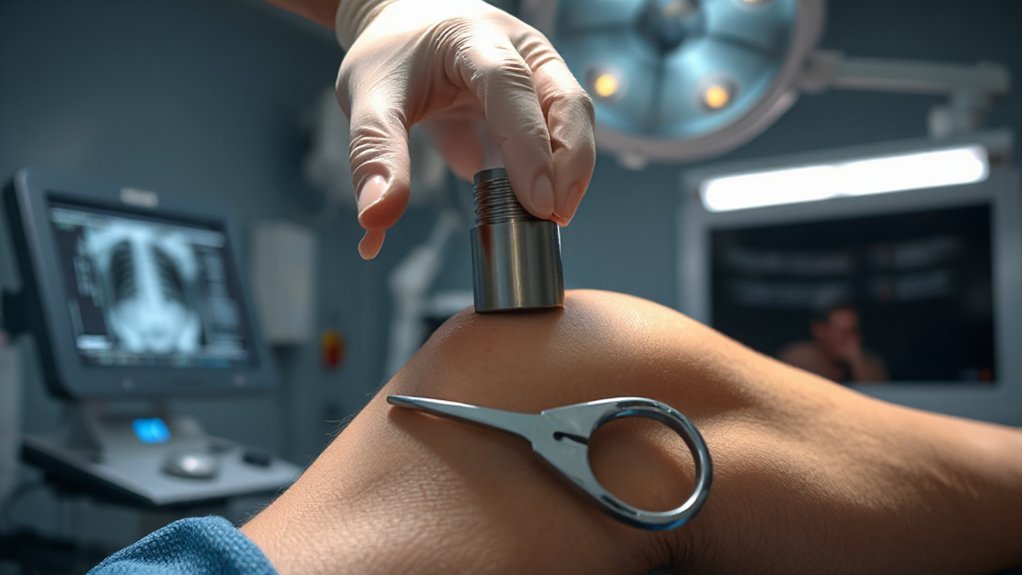
You’ve got the big picture—resurfacing, not a bionic swap—so let’s talk about the hardware and how surgeons place it with precision. Modern implants use cobalt‑chrome or titanium for strength, and a smooth, highly cross‑linked polyethylene insert for glide. Your bone keeps doing the heavy lifting; the components cap it, like a durable crown. Cemented fixation is still common, quick and reliable. Cementless options, with porous surfaces, let bone grow in when your bone quality says yes.
Designs vary. Cruciate‑retaining keeps your PCL; posterior‑stabilized substitutes it with a cam‑post for steadiness. Kneecap resurfacing? Sometimes, based on wear and tracking. Size and shape now come in patient‑matched ranges, so you don’t feel “one‑size‑fits‑none.”
Placement is a team sport. Surgeons use mechanical or kinematic alignment plans, check cuts with guides, navigation, or a robot that verifies angles and soft‑tissue balance. Smaller incisions, smarter tools, less disruption—form follows function, and function matters.
Before surgery, set honest pain expectations: your arthritic ache won’t vanish on day one, but surgical pain has a purpose and usually responds to meds, ice, and smart positioning. Ask your team about anesthesia and nerve blocks—spinal plus an adductor canal block is common—and know the block can last 12–24 hours, give you a head start, and even be extended with a catheter. Expect pain to peak around 48–72 hours, ease across weeks 2–6, and mostly settle by 3 months; use a set schedule—acetaminophen and an NSAID if allowed, short bursts of opioids only for breakthrough, plus ice, elevation, and steady PT—to stay ahead of it.
Even though the goal is lasting relief, knee replacement still comes with real, short‑term pain—and a plan to control it. Before surgery, set honest expectations. Your arthritic pain won’t magically vanish on day one, it shifts to healing pain that peaks in the first 72 hours, then eases, step by step. Expect soreness with movement, burning at the incision, nighttime throbbing, and muscle stiffness. Plan ahead: prehab exercises, daily walking, and gentle stretches. Taper risky meds as instructed, since pausing NSAIDs can bump pain—use ice, elevation, and acetaminophen if cleared. Create a pain diary, set alarms, and prepare your home: high chair, grab bars, freezer meals. Learn your 0–10 pain scale and your goals. Speak up early; adjustments beat suffering. And celebrate small wins.
While no single trick erases surgical pain, anesthesia and nerve blocks do the heavy lifting on day one. You’ll likely get spinal or general anesthesia, plus a targeted block—often an adductor canal block—that numbs pain fibers without turning your thigh to jelly. Add local injections around the knee, and you’ve got a layered defense. Translation: you wake up comfortable, alert enough to participate, and not chasing the pain. Side effects happen—nausea, itch, grogginess—but they’re manageable. Speak up early, and often. Your anesthesiologist wants data: what you feel, what works, what doesn’t. Team sport, remember?
Though the path isn’t identical for everyone, knee-replacement pain follows a pattern you can plan for. Day 1–3: sharp, surgical pain, swollen knee, tight band, but nerve block and meds blunt it. Ice every hour, elevate, ankle pumps, short walks. Day 4–10: soreness shifts to stiffness; PT stretches sting, then ease. Aim for regular acetaminophen, anti-inflammatories if allowed, and timed opioids before therapy. Week 2–6: aches, zings, sleep trouble—normal nerve awakening. Heat before motion, ice after. Guard against overdoing; 10/10 pain means stop. By 6–12 weeks: pain fades to fatigue, stairs still grumble, but function rises. Red flags? Calf pain, fever, draining wound—call fast. And yes, a rainy-day twinge may visit. It usually passes. Track progress daily, small wins add up, and celebrate gains.
You’ll move fast in the early weeks: within 24–48 hours you’re walking with a walker, by week 1 you’re icing, elevating, hitting full straightening (0°), and bending 70–90°, with quad sets, heel slides, and short, frequent walks. By weeks 2–3 you’re showering on your own, doing 5–10 minute walks, managing stairs with a rail, and aiming for 90°–100° bend; by weeks 4–6 you often switch to a cane, push toward 105°–115°, practice step-over-step stairs, and may return to driving if you’re off opioids and can brake hard. Milestones to watch: swelling under control, full extension, bend past 110°, independent transfers and stairs, safe gait without a limp—check, check, check, and yes, that first grocery run counts.
In the first two to four weeks after knee replacement, recovery follows a clear arc: you get up, you move, you heal. Pain and swelling peak early, then ebb with ice, elevation, and scheduled meds. You’ll use a walker, then a cane, as your stride steadies. Short, frequent walks beat one heroic trek. Think minutes, not miles.
Consistency beats intensity; patience pays daily.
As the days stack up after surgery, key rehab milestones mark your progress and keep you honest. Day 1: ankle pumps, quad sets, sit-to-stand, a few steps with a walker. By week 2: full extension to 0°, at least 90° bend, walking room to room, icing like a pro. Stairs? Up with the good, down with the bad, handrail engaged. Weeks 3–6: swap to a cane, bend 100–110°, straighten fully, walk 10–20 minutes twice daily. Drive when you’re off narcotics and can stomp the brake. By week 8–12: 115–125° bend, balanced gait, single-leg stand 20 seconds, light squats, bike 20 minutes. Return to desk work 2–4 weeks, heavier jobs 8–12. Red flags: fever, calf pain, uncontrolled swelling—call your team. Don’t tough it out alone.
While knee replacement is one of the most reliable surgeries in medicine, it isn’t risk-free. You face low but real chances of blood clots, infection, stiffness, bleeding, anesthesia reactions, or nerve irritation. Most problems are uncommon, and your team works hard to keep them that way.
How they minimize trouble? Layers of safety. Pre-op screening for skin or urine infections, MRSA swabs, medication checks. In the OR: antibiotics before incision, sterile technique, modern drapes and airflow. After: blood-thinner pills or shots, compression boots, early walking, ice, elevation, and precise pain control with nerve blocks—so you move sooner.
– But what can you do?
Though no joint replacement lasts forever, most modern knees give you decades of dependable use. Ten-year survival sits around 90–95%, twenty-year around 80–85%. Translation: you’ll likely outwalk the implant’s warranty. Failures happen, but slowly, and usually for clear reasons: polyethylene wear, loosening, infection, or instability.
How do you stretch the clock? Keep your weight in a healthy range, choose low-impact work and play—walking, cycling, swimming—save repetitive jumping for highlight reels. Build strong quads and hips, keep your range of motion, and use good shoes. Get routine checkups every 1–2 years; X-rays can spot quiet problems before they roar. Report new red flags: rising pain after a quiet period, swelling, warmth, wobble, or sudden loss of function.
If a revision’s needed, it’s a bigger lift—more planning, sturdier parts, longer rehab—but success rates are solid. And yes, you can get back to living, not babying. That’s the real goal, truly.
You’ve seen that modern knees can go the distance; the bigger question is who should get one now—and who should tap the brakes.
You’re a solid candidate if pain rules your days, nights, and stairs, and if arthritis shows up on X‑rays despite solid non-surgical care. You’ve tried meds, injections, bracing, therapy, and lifestyle tweaks. Still stuck? Surgery moves up the list.
Pain rules your days and X-rays confirm arthritis despite care? Surgery moves up.
Your decision should match your values, timeline, and daily realities—pain, function, risk, recovery, goals.
Often, the story after knee replacement is this: pain drops fast, function climbs steadily, and most people say, “I’d do it again.” About 80–90% report strong pain relief and better walking, stairs, and sleep; roughly 1 in 5 still has some stiffness, noise, or nagging aches, especially when kneeling or in cold weather. Surgeons see the same arc: 2–6 weeks, you turn the corner; 3 months, chores and short hikes; 6–12 months, you often forget the knee. You’ll still hear clicks, perfectly normal. Risks? Infection ~1%, clots lower with meds and early walking; stiffness if therapy lags. Revisions run about 1–2% per year after year ten, higher if you’re very young or very heavy. To land in the happy group: prehab quads, schedule ice and elevation, take meds before PT, bend daily toward 0–120. Set real goals—kneel on a pad, garden, bike. Watch for fever, calf pain, drainage.
So, here’s the bottom line: knee replacement isn’t magic, it’s smart carpentry for worn cartilage. You trade bone-on-bone pain for metal and plastic that let you walk, climb stairs, and sleep again. You’ll prep, optimize meds, and learn your equipment—walker, ice, compression. You’ll move early, do daily PT, watch for clots and infection, and pace swelling with elevation. Results? Excellent for decades. Will it fix your back? No. Will it lift your days? Often, yes.


