Physical Address
304 North Cardinal St.
Dorchester Center, MA 02124
Physical Address
304 North Cardinal St.
Dorchester Center, MA 02124

Because knee problems alter your gait, back pain can flare—discover the telltale signs and fixes your doctor might overlook.
Yes, a cranky knee can spark back pain. When you limp, lock the knee, or favor one leg, your hip hikes, your pelvis tilts, and your low back takes the hit—especially on stairs or long walks. Clues: uneven shoe wear, tight hip flexors, sore SI joints. Good news: tweak footwear, strengthen hips and core, fix your gait. Want the telltale signs—and the exact exercises that calm both?
Because your body works as one kinetic chain, what happens at the knee doesn’t stay at the knee—it travels north. When your knee collapses inward or stiffens up, your stride changes, ground forces shift, and your pelvis starts negotiating the damage. The tibia rotates, the femur follows, and your hip has to counter-rotate to keep you upright. That twist climbs, tugging on your pelvis and asking your lumbar spine to take up the slack.
You can test this quickly. Stand tall, cave one knee inward, then march in place. Feel your pelvis tip and your lower back tighten? That’s the chain talking. Now try the opposite: align your knee over your second toe, soften your landing, shorten your step, and engage your glutes. Notice the smoother trunk? That’s mechanics. Build the habit when you walk, climb stairs, and squat to pick up a bag. Small, consistent form wins.
While the causes vary, a handful of knee problems reliably nudge your pelvis and low back into trouble. Osteoarthritis stiffens the joint, steals extension, and forces you to stand slightly bent, loading the lumbar segments. Patellofemoral pain or maltracking makes you brace the quadriceps and hip flexors, tugging the pelvis forward. Meniscus tears invite swelling and reflex inhibition, so glutes go quiet, and the back overworks. Ligament laxity after ACL or MCL sprains breeds instability; you clamp down through the spine to feel “secure.” IT band irritation and lateral knee pain pull the femur inward, twisting the pelvis. Post‑surgical stiffness? Same story, plus scar sensitivity.
What helps right now: restore knee extension, even two to three degrees, with gentle heel‑prop hangs. Ease swelling with compression and elevation. Strengthen quads and glute med with short‑arc quads and side‑lying abductions. Tape a cranky kneecap. And, yes, check your chair height.
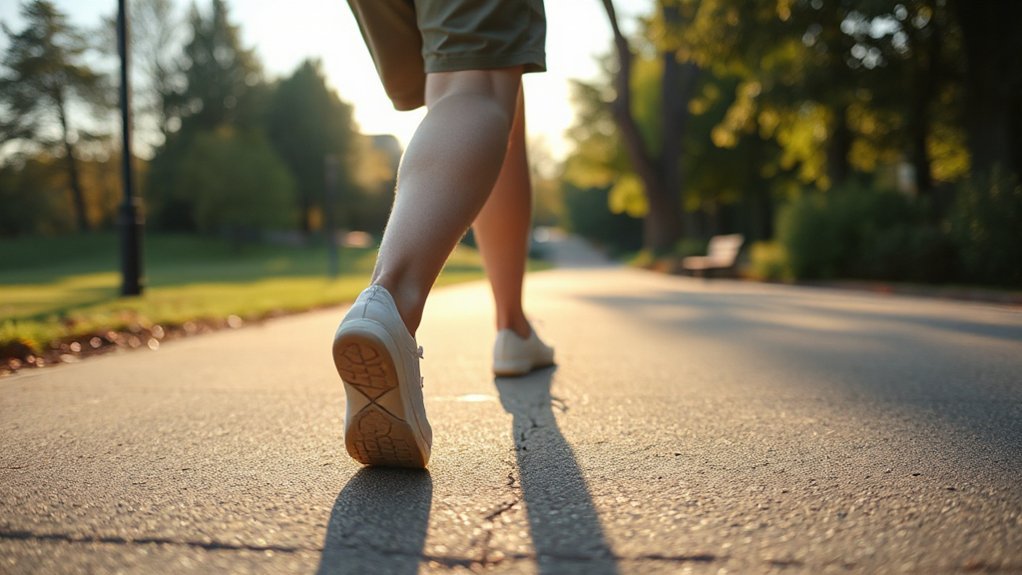
Start at the ground, and the story writes itself: how your foot hits the floor sets off a chain reaction to your knee, hip, pelvis, and low back. If you toe-out, overstride, or land hard on your heel, you send sharp forces up the line. A stiff ankle passes the load to your knee; a guarded knee passes it to your hip; your spine pays the bill. That’s the gait chain in real life.
When your knee misbehaves, you change how you walk—shorter stride, a little hip hike, a bit of toe-out—which tips your pelvis and tugs on your lower back. With that tilt, your deep core often underfires, your quads and low back jump in, and stability fades with every step. Start fixing the pattern: keep steps small and straight, squeeze the glute on the sore side, brace your lower abs on a long exhale, then add marching, dead bug, and suitcase carries for 30–45 seconds—simple, steady, daily.
Limping throws your whole chain off, and a cranky knee is often the first domino. To dodge pain, you shift weight, shorten your step, and twist your trunk a hair. That altered gait tilts your pelvis, hikes one hip, and ratchets stress into your low back. Overpronation on the sore side, toe-out on the other, uneven cadence—small tweaks, big torque. Stairs? You pull, not push, and the spine pays.
Clean it up. Slow down, take shorter, even steps, and match your foot strikes like a metronome. Keep your nose, sternum, and zipper facing forward. Choose supportive shoes, skip the worn heels. On bad days, use a rail or cane for symmetry—temporary, not forever. Track swelling, treat the knee, and re-test your walk each week.
Because a cranky knee steals power from your push-off, your hips and core try to babysit the load, and that’s where trouble starts. You grip with your back, your pelvis tips forward or tucks under, and your deep stabilizers go offline. Result? Weak core activation, stiff erectors, nagging low-back ache. Fix the pattern, not just the pain. Start with breath: exhale fully, ribs down, feel lower abs turn on. Then do marching bridges, side planks with a knee bend, and split-stance chops, all barefoot if tolerated. Keep knee over second toe, pelvis level, belt buckle slightly up. Short steps, slow tempo, smooth push-off. Daily? Two sets, 6–8 slow reps. Bonus checks: sit tall, equal weight on sit bones, and stop clenching your butt today.
Ever notice your lower back acting up after your knee has a rough day? That’s a classic clue. If back pain flares after stairs, hills, or a long squat-heavy day, and your cranky knee was working overtime, they’re likely linked. Notice side-specific pain: sore right knee, achey right low back or SI joint, sometimes into the butt. Your walk tells on you, too—shorter stride, toe-out, or a stiff “peg-leg” step, and your back grips to keep you upright.
Other signs: your back eases when you unload the knee—sitting, using a railing, or wearing a knee sleeve. Chair-to-stand feels fine, but the first few steps bite? Another hint. Tighter hamstrings, a hitchy hip, or outer-hip tenderness on the knee side also point upstream. Check your shoes: uneven wear on the opposite heel or the outside edge? Compensation. And if a knee swell-up predicts tomorrow’s back crankiness—there’s your smoking gun.
Let’s spot the sneaky habits your body uses to protect a cranky knee—because those same cheats can tug on your back. First, try a Single Leg Balance Check: stand on one leg for 20–30 seconds, barefoot if you can, and watch for wobbling hips, a dropped arch, or your torso twisting to “help.” Then do a Step Down Knee Tracking test: step off a low box or stair slowly, knee bent, and see if your knee drifts inward past your big toe—if it does, that’s a red flag for compensation and extra strain up the chain.
How steady are you on one leg? Stand barefoot near a counter, cross your arms, and lift one foot. Hold for 30 seconds. Repeat on the other side. Use a mirror. Watch for toe gripping, arch collapse, knee drifting inward, hip drop, trunk lean, or your back tensing. Hear your breath stop? Restart it. Shake out, try again.
Now level it up: eyes closed for 10 seconds on each side, still on a firm floor. Compare sides. Big difference means your body’s compensating, often guarding a cranky knee by asking your hips and back to overwork. That extra bracing, day after day, can nudge back pain.
Too wobbly? Light fingertip support is fine, then wean it. Practice daily, 2–3 sets. Simple, revealing, actionable. Today.
Tracking your knee as you step down tells the truth fast. Stand on a 6–8 inch step, hands on hips, other heel hovering. Slowly bend the standing knee for three seconds, tap the free heel to the floor, then return. Film from the front and side.
What should you see? Knee stays over second toe, pelvis level, arch alive, trunk steady. What’s trouble? Knee dives inward, arch collapses, pelvis drops, or you twist and reach with your back—classic compensation that can load your spine.
Fix it now: shorten the step, slow the tempo, press the big toe, screw the foot, and push the hip back. Think soft knee, tall ribs. Add mini-band step-downs, wall taps, and pauses. Pain, buckling, or clicking? Stop and consult.
Building steady knees starts at the hips, because strong glutes and good control keep your thigh from caving in and your kneecap tracking true. Start with clamshells: lie on your side, knees bent, feet together, lift the top knee without rolling your pelvis. Do 2–3 sets of 12–15 each side. Next, side-lying leg raises, toe slightly down, slow both ways. Then bridges: heels under knees, ribs down, squeeze your butt, not your back, for 3 sets of 10. Add a pause.
Stand up. Try a single-leg Romanian deadlift, light or no weight. Hinge from your hips, keep the knee soft, shin quiet, 3 sets of 6–8. Follow with mini-squats to a box, two feet, then single-leg, knees tracking over the second toe. Finish with monster walks and lateral band steps, small, controlled strides, steady hips. Breathe, keep your trunk tall, and own the tempo: three down, one up.
Start by picking supportive shoes—firm heel counter, midfoot stability, low-to-moderate heel drop (6–10 mm), roomy toe box—and skip flat, squishy, or worn‑out pairs. If your knee caves in or rotates, see a pro about orthotics or posted insoles to guide alignment, cut tibial rotation, and calm the chain from foot to back—try them for two weeks, then you’ll reassess. Now tweak daily habits: stand with soft knees and split weight, sit with hips slightly higher than knees and feet flat, rotate shoes and bags, take 2‑minute movement breaks each hour—tiny changes, big relief; your back will notice.
While your knee may be the squeaky wheel, your shoes often steer the whole system—feet, knees, hips, and yes, your back. Pick shoes that share impact: cushioned midsoles, stable platforms, a slight heel‑to‑toe drop. You want a snug heel counter, roomy toe box, and no hot spots. Bend test: flex at the toes, not the middle. Twist test: some resistance is good. Try them late in the day, wear your usual socks, walk fast—any wobble or pinch? Hard pass. Favor low heels, solid traction, and light weight for longer days. Ditch worn pairs; replace around 300–500 miles. Rotate two pairs to vary stress. For work, choose supportive loafers or lace‑ups; for workouts, go with activity‑specific trainers. Your back will notice. And your knees, too.
Good shoes set the stage, but orthotics and small daily tweaks fine-tune how your knees line up—and how your back feels. When your arch collapses, your shin rotates, your knee caves in, and your pelvis compensates. Orthotics interrupt that chain, nudging joints back to neutral, easing strain up the spine. Start simple, test, then level up.
Reassess weekly; comfort and alignment should steadily improve.
Even before you hit the gym, your day-to-day choices teach your knees and back how to behave. Choose shoes that work, not just look: firm heel counter, moderate cushion, low heel, good grip. Ditch worn pairs after 300–500 miles, and skip flip-flops and sky-high heels. Add help when needed—arch supports, a knee sleeve, or a patellar strap—for long walks or busy shifts. Tweak standing: feet hip-width, toes forward, knees soft, weight over midfoot. Sit smart, 1:1 sit-stand ratio, microbreaks every 30–45 minutes. Hinge at the hips to lift, keep loads close, use both backpack straps. In the car, hips slightly higher than knees, lumbar roll. Sleep side-lying with a pillow between knees. Simple, repeatable, protective. Small choices, repeated often, steer pain in better directions.
So when should you stop guessing and get your knee–back story checked out? If pain lingers past 2–4 weeks despite rest and smart routines, it’s time. If walking feels crooked, stairs spark knee twinges and back zaps, don’t wait. A clinician can test alignment, strength, nerve tension, and gait, then decide if imaging adds value. X-rays show joint space and bony spurs; MRI maps cartilage, meniscus, discs, and nerves; ultrasound catches tendon irritation in motion. You don’t need every scan—just the right one.
Choosing a path forward starts with matching the fix to the driver—mechanics, inflammation, nerve irritation, or true structural damage. If mechanics lead, start with rehab: strengthen hips and quads, mobilize ankles, retrain gait. Think mini-squat form, step-down control, split-stance balance, cadence tweaks during walks. Add core work to unload the back, and glute activation to steady the knee. Use ice or heat for symptoms, but track progress with simple metrics—pain during stairs, walking distance, morning stiffness.
If inflammation dominates, try NSAIDs as advised, topical diclofenac, and targeted injections: corticosteroid for a short reset, or hyaluronic acid for grinding arthritis. Nerve irritation from the spine? Consider an epidural, plus neural glides in therapy. When structure’s gone—locked meniscus, advanced OA, severe deformity—surgery enters: arthroscopy for select tears, osteotomy to realign, or knee replacement when function tanks. Prehab 4–6 weeks, optimize weight, control diabetes, stop smoking. And after? Aggressive rehab. Nonnegotiable.
Bottom line: your knee and back share the same chain. If the knee’s cranky, your spine pays. So audit your gait, check shoe wear, and try a two-week tune-up: hip abductor work, terminal knee extensions, calf raises, and core bracing. Swap worn shoes, add supportive insoles, shorten strides. Still hurting, night pain, or numbness? See a clinician, ask for gait screen, maybe imaging. Fix the knee, calm the pelvis, give your back a fair fight.


