Physical Address
304 North Cardinal St.
Dorchester Center, MA 02124
Physical Address
304 North Cardinal St.
Dorchester Center, MA 02124


I reveal what knee replacement really feels like—recovery milestones, real risks, and results most achieve—plus the startling first 48 hours you won’t expect.
Wondering how bad knee replacement really is? You’ll spend a couple hospital days, then hit rehab hard—bent knee, straight knee, repeat—with progress in weeks and stronger steps by month three. Pain? Manageable with meds, ice, and grit. Risks exist—clots, infection, stiffness, nerve tweaks—but precautions make serious issues uncommon. Most people trade bone-on-bone misery for smooth, steady motion, and implants often last 15–25 years. Curious what the first 48 hours actually feel like?

Replacing your knee means swapping out the worn, painful joint surfaces for smooth, durable parts that let you move with far less grind. In the operating room, you’ll get anesthesia, the team cleans and drapes your leg, and a precise incision exposes the joint. The surgeon removes damaged cartilage, trims a thin slice of bone, and resurfaces the femur and tibia. Metal components go on, cemented or press-fit, with a high-grade plastic spacer in between. If needed, the kneecap’s back gets a button. Alignment gets checked, tested, checked again.
Before all that, you complete imaging, labs, and a pre-op plan—sometimes custom guides. The procedure usually runs one to two hours. After closure with sutures or staples, you get a dressing, a brace if needed, and instructions. You stand and take steps the same day, using a walker. Then comes focused rehab, daily moves, and steady milestones. Measurable progress.
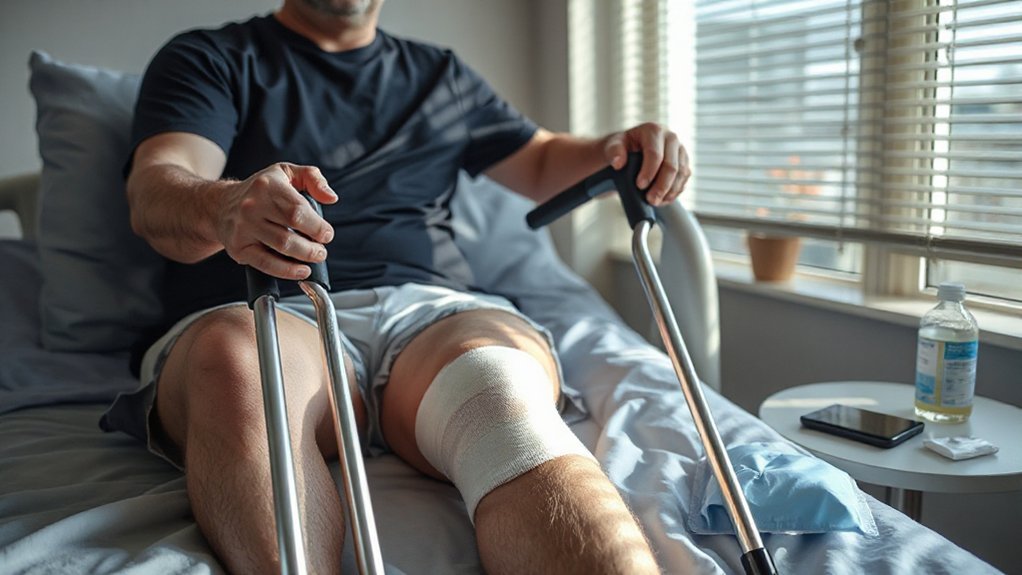
Right after surgery, you’ll feel real pain—ache, burn, stiffness—usually peaking when the nerve block wears off in the first 24–72 hours. Your best play is a multimodal plan: nerve block or spinal, round‑the‑clock acetaminophen and an NSAID if safe, a short opioid for breakthrough, ice 20 minutes at a time, leg elevated above heart, snug compression, and a dose before physical therapy. Ask for a written schedule, use a 0–10 pain score to tweak meds, set night alarms, and keep ankles pumping and quads firing hourly—because steady control beats chasing pain, and it gets you walking sooner.
Although this is major surgery, the first 24–48 hours bring real pain—but it’s manageable, and we plan for it. You’ll feel a deep, throbbing ache around the incision and a sharp, mechanical sting when the knee moves. Swelling makes the skin tight, warm, and hypersensitive; even sheets can annoy you. Standing the first time? It may spike to an 8 or 9 for a minute, then settles. At rest, many people sit around a 4–6, with short flares during transfers, ankle pumps, or bending. The tourniquet site can burn, and your thigh may feel bruised. Expect stiffness at dawn, a heavier throb at night, and a slow, daily nudge downward. Pain tracks effort: more activity, more signals. But more signals, more healing—your body’s updates.
Pain is real, but you don’t have to white‑knuckle it; we use a full toolkit to keep it tolerable and keep you moving. We stack methods: a spinal or nerve block for day one, scheduled acetaminophen, anti‑inflammatories if your stomach and kidneys agree, and ice. Add elevation, compression, and a walker that keeps you honest. Opioids? Short, small doses, with stool softeners and a taper plan. We also use nerve‑calming meds, like gabapentin, when appropriate. You’ll track pain on a 0–10 scale, then we adjust. Physical therapy starts early, gentle but steady. Breathe, nap, hydrate, repeat. Try mindfulness or music; yes, it helps. Red flags—fever, sudden calf pain, chest pain—call. Otherwise, expect progress. Not perfection, progress. Ice machines help; use them 20 minutes often.
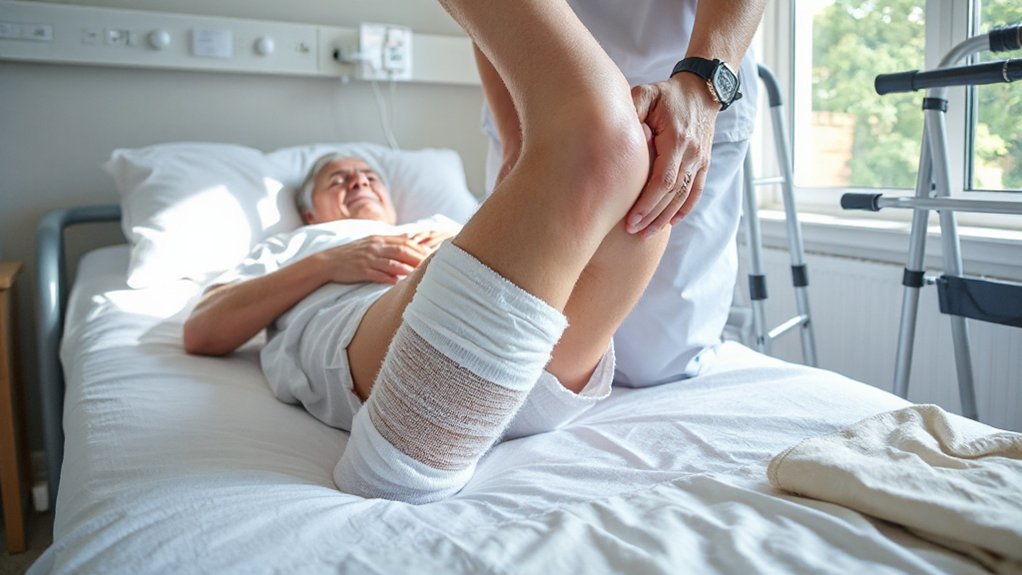
On day one, you’ll wake up in recovery with monitors beeping, a bulky dressing on your knee, and a plan. Nurses check vital signs, manage pain, start IV antibiotics, and fit compression boots. A therapist gets you sitting, then standing with a walker. Yep, day one. You’ll practice ankle pumps, deep breaths, and a short hallway lap. Back in bed, ice and elevate. Eat light, sip fluids.
Day two to three, you learn the routine: scheduled meds, icing every hour, bathroom trips with help, and three mini PT sessions. Quad sets, heel slides, gentle knee bends, and straight‑leg raises. At home by day two or three if safe. You’ll guard the incision, keep the dressing dry, and watch for warning signs—fever, calf pain, drainage, chest tightness. You’ll start a blood thinner, stool softener, and sleep in chunks. By week two, aim for 0–90° bend, steadier steps, and fewer naps.
By weeks three to six, you shift from “surgery patient” to “strong knee in training,” and your days start to look normal again. You’ll walk farther, first with a cane, then often without it for short, safe trips. Physical therapy ramps up: heel slides, sit-to-stands, mini-squats, step-ups, stationary bike. Goal posts help—flexion near 100–120 degrees, extension to flat. Swelling’s still real, so you ice after activity, elevate at night, and use compression. Pain meds taper; anti-inflammatories and acetaminophen usually carry the load.
You start driving when you’re off narcotics, can do an emergency brake, and feel alert—usually around weeks 4–6 for right knees, sooner for left. Chores return: light cooking, laundry, store runs, not hero lifting. Desk work? Often okay by week 4–5 with movement breaks. Stairs become step-over-step with a rail. Sleep improves. Celebrate small wins, log your steps, and keep the knee honest—not reckless, not timid.
As months three through twelve unfold, you shift from “recovering” to “rebuilding,” turning a new knee into a reliable engine for daily life. By month three, you walk longer distances, climb stairs with a handrail, and drive confidently. You’ll keep formal PT or switch to a home program: strength work 3 days a week, mobility daily. Think sit‑to‑stands, step‑ups, mini squats, cycling 20–30 minutes, and gentle hills. You retrain balance with single‑leg stands and tandem walks.
By months four to six, you push pace and endurance. Add light jogging drills on surfaces if cleared, return to golf with a cart, swim, or garden. Kneel sparingly, pad the knee, test positions slowly.
Months seven to twelve, you fine‑tune. Build symmetry, power, and confidence: faster walks, longer rides, resistance bands, then weights. Track wins—stairs without pauses, trips, a steady workday. And keep the habit: move daily, progress weekly, rest smart.
Even with modern implants and skilled teams, knee replacement carries real risks—you deserve the straight talk. Infection tops the list: redness, heat, drainage, fever—call fast. Hospitals use sterile protocols, skin prep, and antibiotics; you can help by keeping the dressing clean, washing hands, and skipping tub soaks. Blood clots are next. Calf pain, swelling, sudden chest pain or breathlessness? That’s an emergency. You’ll likely use blood thinners and compression devices.
Other issues happen: bleeding, poor wound healing, nerve irritation or numb patches, and stiffness from scar tissue. Rare but real: implant loosening, fracture around the implant, allergic metal reaction, complex regional pain syndrome, anesthesia problems. Pain that lingers past normal healing can occur, especially with severe arthritis or high pain sensitivity.
Lower your odds: don’t smoke, manage diabetes, reach a healthy weight, review meds that raise bleeding risk, treat skin or dental infections, and follow incision-care instructions exactly.
You’ll start moving right away—ankle pumps in bed, heel slides, sit-to-stand every hour, short walks with a walker within 24 hours, plus ice and elevation to calm swelling so you can keep going. Aim for clear milestones: by week 1–2, full knee straightening and about 0–90° bend with quad sets and straight‑leg raises; by week 3–6, 0–110°+ bend, solid stair practice, balanced gait, and daily hamstring and calf stretches. Track your numbers, pre-med before tough sessions, and keep the habit—small reps, often, win the race (no cape required).
Starting early isn’t a dare—it’s the strategy that gets you walking, bending, and living sooner. Within hours, you’ll do ankle pumps, quad sets, and deep breaths to wake up circulation and lungs. Then the basics: sit at the edge of the bed, plant your feet, stand with a walker, take five to ten steps. Short, frequent bouts beat hero marches. Elevate, ice, and time pain meds 30 minutes before sessions, so you move well, not grimace through it. Keep the knee straight when resting, heel propped, towel under the ankle—not the knee—to protect extension. Practice safe transfers, high chairs, and a raised toilet seat. Walk the hallway every couple hours, eyes up, small steps. Listen to pain, not fear. Progress, pause, repeat. Stay consistent.
Those first steps set the stage; now we measure and build. In week one, aim for full knee extension to 0 degrees, and at least 70–90 degrees of bend. Quad sets, heel slides, ankle pumps—daily, not heroic, just steady. By week two to four, add straight‑leg raises without lag, sit‑to‑stands, and mini squats to a chair. You should hit the bike with full revolutions by week three or four, gentle resistance only.
Who, exactly, is a good candidate for knee replacement? You are when knee pain and stiffness limit basics—walking a few blocks, climbing stairs, rising from a chair—and wake you at night. X‑rays usually show bone‑on‑bone arthritis, deformity like bow‑legs or knock‑knees, or joint space that’s vanished. You’ve tried reasonable care: anti‑inflammatories, activity changes, bracing, physical therapy, maybe injections—and the relief didn’t last.
You also fit if the knee feels unstable, locks or grinds, or your range of motion is shrinking. Osteoarthritis is common, but severe rheumatoid arthritis, post‑traumatic damage, or avascular necrosis can lead you here too. Age isn’t a hard rule; health and function matter more. A moderate BMI helps outcomes, but higher BMI alone isn’t an automatic no. What matters: you want meaningful pain relief, better function, and you’re ready to work with a surgeon and stick with rehab. Clear goals, expectations, follow‑through. That’s candidate material.
Before you pick a surgery date, get your body, home, and calendar ready—this is how you lower complications and speed recovery. Start with “prehab”: daily quad sets, straight‑leg raises, gentle cycling, and ankle pumps. If you smoke, stop now; even four weeks helps wounds heal. Tidy up your medical list, control blood sugar, blood pressure, and weight, and ask about MRSA screening and a dental check to cut infection risk.
Review medications with your surgeon: blood thinners, NSAIDs, diabetes drugs, even supplements like turmeric and fish oil. Plan anesthesia and pain control, including nerve blocks, ice, and stool softeners—nobody wants a constipation subplot.
Prep your home: remove rugs, add night lights, raise a chair, put a shower chair and handrail in. Line up rides, a caregiver for 72 hours, and pre‑made meals. Stock compression stockings, ice packs, and wound supplies. Finally, take class, ask questions, sign the plan.
Years after surgery, you should feel far less daily pain, with aches shrinking to brief flare-ups after long days. Most modern implants last a long time—about 90–95% at 10 years and 80–85% at 20—so you plan life, not revisions. Expect steady function: walk a few miles, climb stairs, garden, cycle; maybe not marathon sprints or deep kneeling, and with strong quads, a healthy weight, and routine checkups, your knee stays happy (and no, you don’t need to baby it like fine china).
Fast-forwarding a few years, you can expect knee pain to stay far lower than it was before surgery—often gone for daily life, with only occasional, manageable aches after a big day. Most people walk farther, climb stairs smoother, and sleep without that deep, throbbing wake-up call. You might feel weather twinges, or a tight band after long car rides, but these usually fade with motion. You’ll keep relief strong by pacing activity, building quad and hip strength, keeping weight steady, wearing supportive shoes, and using ice or an anti-inflammatory when you overdo it. Warm up before hikes; cool down after. Expect muscle soreness now and then—that’s fitness, not failure. Sharp new pain, swelling, redness, warmth, or fever? Call your surgeon, not Dr. Internet. today.
Pain down, life up—so how long does the hardware last? Most modern knee implants last 15–20 years, and many reach 25+, thanks to improved polyethylene and better alignment. Large registries report roughly 90–95% survival at 10 years, about 85–90% at 20. Not bad odds.
What shapes your curve? Age, weight, activity intensity, bone quality, and surgical precision. You can’t change everything, but you can stack the deck.
If problems arise, revision can refresh parts. Schedule X-rays every 1–2 years at visits.
Stairs and sidewalks start feeling friendly again: with a well-done knee replacement, you can expect steady, reliable mobility for the long haul. Years later, you’ll walk a mile or two, climb flights, and stand in lines without bargaining with pain. You’ll bend to garden, pivot in the kitchen, and carry groceries, using a smooth heel‑to‑toe gait. Most people regain near-full extension and 110–125 degrees of flexion; that means cars, chairs, and steps feel routine. Keep it by training strength, balance, and mobility, twice a week, forever. Think squats to a chair, step‑ups, stationary bike, and daily walks. Pace high‑impact sports, but don’t baby the joint. Expect swelling after days; ice, elevate, compress, and keep moving. If pain spikes or motion stalls, check in early.
You’ve got the facts: what surgery involves, how it feels, and how recovery unfolds. Choose smart. Pick a high‑volume surgeon, line up home help, prehab your quads, nail your pain plan, and do PT like it’s your job. Watch for clots, infection, stiffness; act fast if something’s off. Expect a tough two weeks, steadier weeks 3–6, and wins by 3–6 months. Most people walk easier, sleep better, and get their life back. That’s the point.


