Physical Address
304 North Cardinal St.
Dorchester Center, MA 02124
Physical Address
304 North Cardinal St.
Dorchester Center, MA 02124

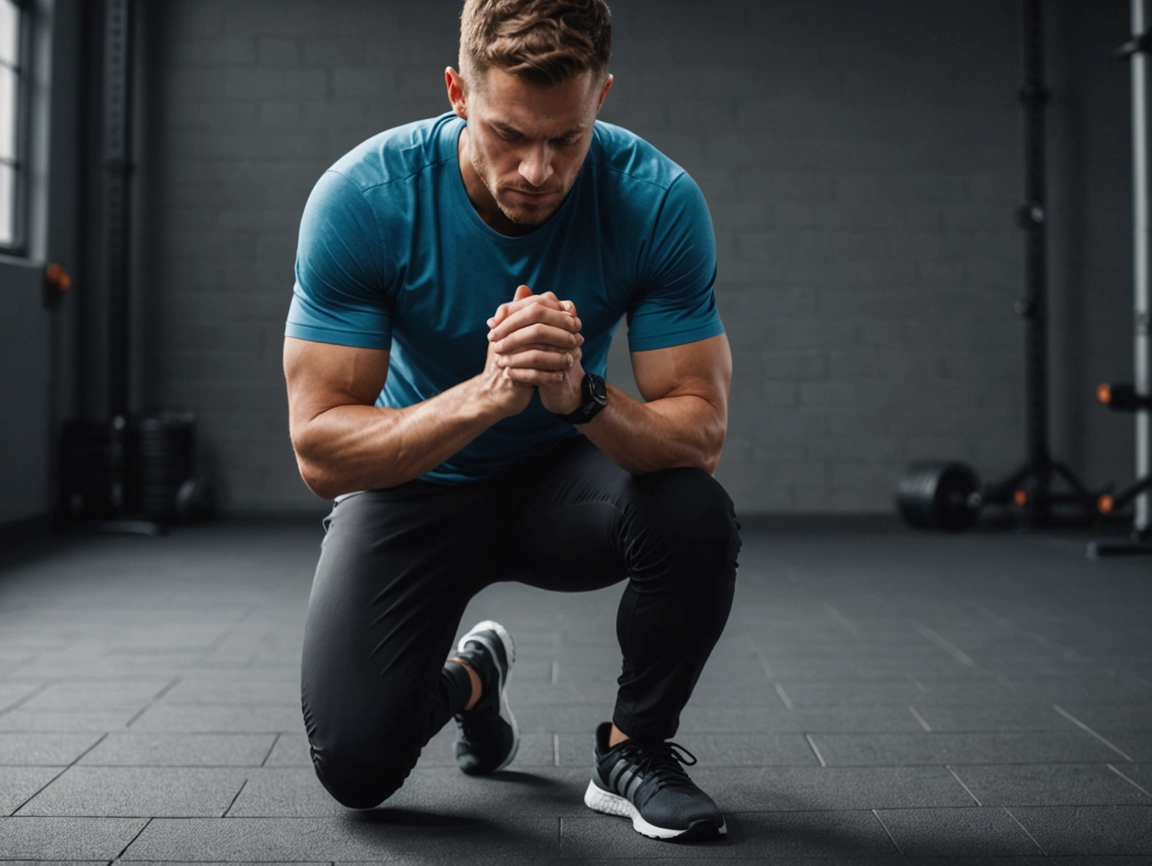
Often kneeling hurts due to jammed kneecaps, tight quads, and irritated tissues—discover quick fixes and simple self-tests that reveal your fastest relief.
Kneeling stings because a deep bend jams your kneecap into the groove, squeezing cartilage, fat pad, and even irritated bursae—tight quads and weak hips pile on. Quick wins: pad the knee, shift more weight to your shin, pick softer floors, keep bursts short. Then start gentle quad sets, glute bridges, and hip‑flexor stretches, add ice or a topical NSAID. Want simple self-checks to pinpoint the culprit—and the fastest fix?
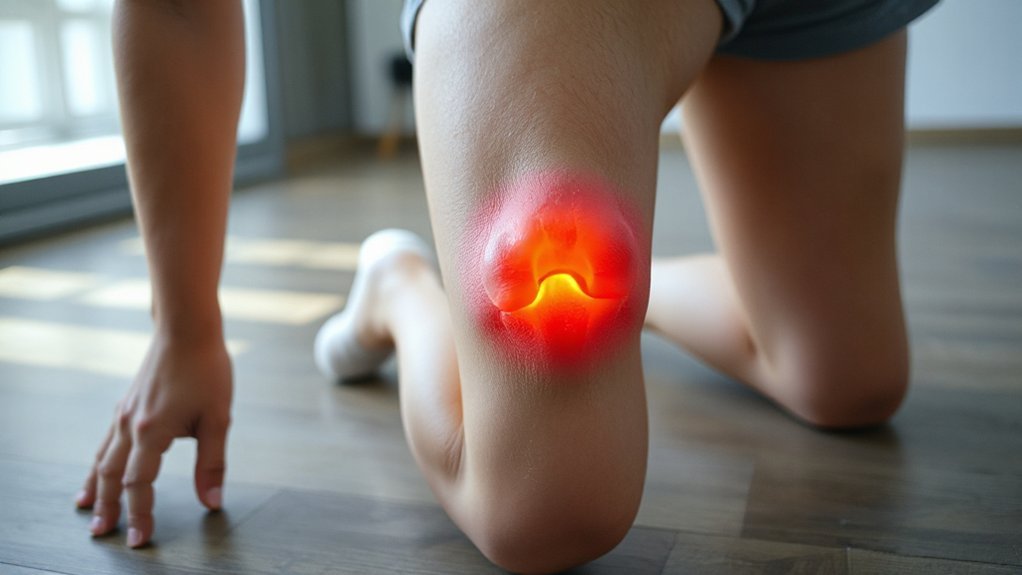
As you drop to your knees, your joint shifts from a casual hinge to a compact, high-pressure machine. The femur rolls and glides on the tibia, while the menisci squish, spread, and share the load. The kneecap tracks down the groove, increases contact area, and ramps up patellofemoral pressure. Quad and hamstring forces co-contract, steadying the joint, as ligaments tighten to guide motion. You flex deeper, the tibia rotates slightly inward, and the patellar tendon angle changes, pulling the kneecap snug. Cartilage deforms like a wet sponge, then rebounds, pushing synovial fluid across the surfaces to lubricate and feed them. The fat pad and bursa compress, acting as cushions and gliders. Your center of mass shifts forward, so you lean, brace with your core, and offload with your hands. Smooth, controlled, stacked—hips back, shins vertical—everything feels organized. Rush it, twist, or slump, and tissues complain. You feel immediately.
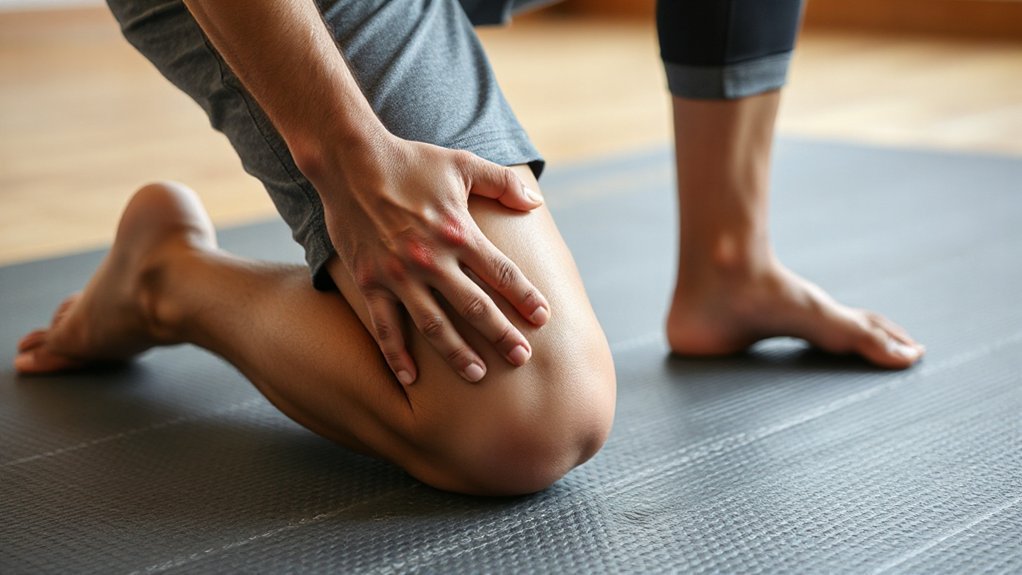
When kneeling hurts, the usual suspects are prepatellar bursitis (that puffy “housemaid’s knee”), patellofemoral pain syndrome, and knee osteoarthritis. Quick clues help: puffy, tender kneecap after pressure points to bursitis; pain around or behind the kneecap with stairs, squats, or long sits screams PFPS; stiffness, creaking, and morning start-up pain suggest OA. You can start sorting it out now—use a kneeling pad and brief rest for bursitis, hip/quadriceps strengthening and taping for PFPS, and gentle load management with heat for OA—and we’ll map sharper next steps from there.
Though it sounds fancy, prepatellar bursitis is simply irritation of the small, fluid-filled sac that sits right in front of your kneecap—your built‑in cushion for kneeling. Repeated kneeling, a hard bump, or pressure from work on floors can inflame it. You’ll see swelling like a squishy cap, tenderness to touch, and pain when you kneel or crawl.
Start simple: dial back kneeling, use knee pads or a folded towel, and switch tasks. Ice 10–15 minutes, 2–3 times daily, compression wrap snug not numb, leg elevated. Short courses of over‑the‑counter anti‑inflammatories help, if safe for you. Keep the joint moving: gentle bends, quad sets, calf and hamstring stretches.
Call a clinician if it’s hot, red, enlarging, or you can’t bend. Aspiration, antibiotics may be needed.
Not all kneeling pain comes from that front-of-the-knee bursa; a lot of it shows up inside the joint under the kneecap—patellofemoral pain syndrome, the classic “runner’s knee.” You’ll feel a deep, vague ache around or behind the kneecap, worse with kneeling, squats, stairs, hills, or sitting too long (the “movie theater” ache).
What’s going on? The kneecap isn’t gliding smoothly in its groove. Tight quads, hip weakness, IT band tension, flat feet, or training spikes can all nudge tracking off-center and load the cartilage.
Do this: dial back pain triggers for two weeks, then rebuild. Prioritize hip abductor and quad strength, especially slow step-downs. Add quad/IT band mobility, taping, and patellar glides. Use supportive shoes. Ice after activity. Still flaring? See a sports PT.
Persistence has a name: knee osteoarthritis. When you kneel, worn cartilage and irritated bone surfaces press together, and your joint protests. Swelling increases pressure, stiffness limits bend, and little bone spurs snag like sandpaper. Age, old injuries, and extra body weight often drive it. But you’re not stuck. You can lower pain, protect motion, and still get things done.
Steady beats flare-ups.
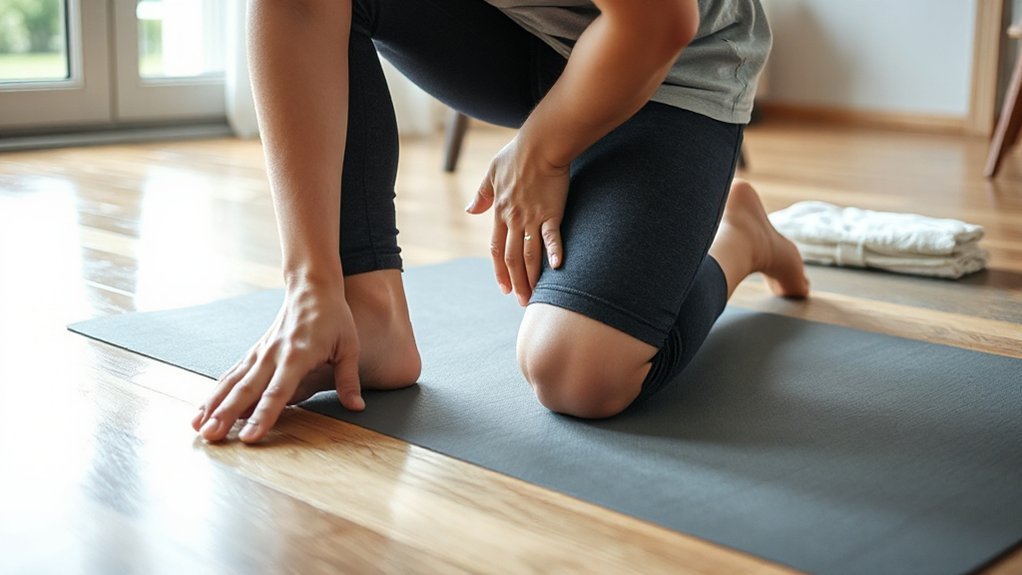
How do you pin down why your knee screams when you kneel—without a full clinic workup? Start with location. Front of knee points to patellofemoral trouble; a sharp spot right over the kneecap pad hints at bursa irritation. Press around the edges of the kneecap—tender rim, crunchy glide, or grinding when you gently squat? Think tracking issues. Puffy, warm, squishy? More fluid in the joint.
Now movement. Try a chair sit-to-stand: pain increases as the knee bends past 60 degrees, the quad’s suspicious. Do a wall squat for 30 seconds; burning above the kneecap says overload. Single‑leg sit-to-stand from a high chair, no hands—knee drifting inward? Hip strength is in on the act.
Surface matters. Hard floor worse than a folded towel points to pressure sensitivity. Toe‑tucked kneeling worse than flat-foot kneeling flags tight quads. And if a brisk five‑minute walk calms things down, stiffness—not injury—likely leads. Today.
So when should you stop DIY-ing and call in backup? If kneeling sparks sharp, stop-you-in-your-tracks pain, or your knee swells like grapefruit, don’t push through. Sudden trauma, a pop, or a knee that won’t straighten or bear weight—those are professional problems. Heat, redness, fever, or calf pain? Urgent. If aches persist more than two weeks despite rest, it’s time to be seen.
Stop DIY: sharp kneeling pain or grapefruit swelling? Pop, fever, or can’t bear weight—get care.
Even if your knee’s cranky, you can kneel smarter right now. Swap a full kneel for a half‑kneel: one knee down, the other foot planted, shin vertical. Use a tall kneel for brief tasks, hips hinged, weight through shins and feet, not kneecaps. Try a side kneel—both knees down, hips shifted to one side—if front-of-knee pain protests. Keep the ankle relaxed; some knees like toes tucked, others prefer laces flat. Test and pick the calmer option.
Pad like you mean it. Use a thick garden pad, folded yoga mat, or a rolled towel right under the tibial tubercle, slightly below the kneecap—bullseye accuracy matters. Soft surface still hurts? Add gel knee pads over leggings, or double up. Work closer to you, raise the project on a crate, or elevate yourself on a low cushion. Limit kneel bursts to 1–2 minutes, then stand, shake, and reset. Small tweaks, relief.
Building strong, calm knees starts with the muscles that steer your kneecap and share the load: quads (especially the inner quad), glutes, hamstrings, and calves, plus a steady core. Strength work teaches those tissues to carry you when you drop to the floor, so you don’t ask the joint to do it all. Do this 3–4 days a week, easy to moderate effort, slow tempo.
Stronger knees start with steady muscles: quads, glutes, hamstrings, calves, and core sharing the load.
1) Short-arc quad + TKE: Roll a towel under your knee, straighten slowly for 3 seconds, hold 2, lower 3, 12–15 reps. Then stand with a band behind the knee, gently press back to lock, 15 reps.
2) Step-downs, box: Hips back, knee tracks over second toe, tap the heel, return. 3 sets of 6–10 per side. Quiet landings.
3) Bridge to march: Lift hips, ribs down, squeeze glutes, hold 5 seconds, then alternate knee lifts without pelvis wobble. 3 sets, 30–45 seconds.
Let’s make bending easier by freeing the front, back, and center: start with a quad and hip release using a foam roller or ball, 60–90 seconds per spot, slow breath in, slow breath out. Next, do calf and hamstring glides with a stick or ball—slow passes from ankle to knee, bend and straighten as you go, two rounds each side; it’s flossing for your legs, minus the mint. Finish with patellar mobilization: knee relaxed and straight, gently glide the kneecap up, down, and side-to-side, 20–30 small, pain-free reps—no forcing, no hero work.
Unknotting your quads and hips is the quickest way to give your knee room to bend without barking back. Tight front-thigh and hip flexors yank on the kneecap, so kneeling stings. Good news: you can calm that pull fast with simple maintenance.
Kneel and test; it should feel freer now.
Gliding the calves and hamstrings takes the handbrake off your knee bend, fast. Sit with one leg long, loop a strap around your forefoot, and slowly flex and point the ankle while you pull the strap—thirty smooth reps, gentle tug, no grimacing. Then bend and straighten the knee as the ankle moves; that nerve-and-fascia glide helps the whole chain. Next, heel on a low step, knee soft, hinge forward, and sweep your hips back and forth—ten slow sweeps. For the calves, kneel, place a ball under the meat of the calf, and gently sit back; roll an inch, breathe, hunt for sticky spots, 60–90 seconds. Finish with ten mini-squats holding a counter, heels heavy, knees tracking. Feels easier? Good. Repeat 3–5 times weekly. Consistently.
You loosened the back line with those glides; now it’s time to free the front door—the kneecap itself. The patella should slide easily north–south and east–west. When it sticks, bending feels pinchy, kneeling feels risky. So you’ll coax it. Gentle, steady, no hero moves.
1) Supine quad slack: Lie back, knee straight, quad relaxed. Using two fingers above and below the patella, glide it left–right for 30–45 seconds. Breathe. No pain; mild stretch is fine.
2) Heel-prop tilt: Sit with heel on a book, knee slightly bent. With thumbs on edges, nudge the cap up–down, small ranges, 20–30 reps each.
3) Hook-lying circles: Knee bent, foot down. Sink soft tissue around the borders with a lotion glide, then trace tiny circles, clockwise/counterclockwise, 30 seconds.
Dial in what’s under and around your knees, and kneeling gets easier—sometimes instantly. Start with footwear: cushioned trainers soften contact when you drop to a knee, while flexible, flat soles let your foot spread and your ankle move, easing patellar load. If you’re on hard floors, add a thick foam pad, yoga mat folded twice, or a gel kneeler; on carpet, a small garden kneeler or folded towel works. Outdoors? Pick level ground, avoid roots and loose gravel, and clear debris—pebbles become torture devices.
Protect bony points. Use volleyball knee pads, tactical sleeves with gel, or slip-on neoprene pads; snug, not tourniquet-tight. Prefer smooth fabric that won’t snag when you pivot.
Need to kneel long? Alternate sides, and park your weight on a shin, not directly on the kneecap. For sensitive skin, wear durable pants or a work apron. Yes, a garden pad in your car? Hero move.
Great pads and smart surfaces buy you comfort; now we’ll rebuild how your knees tolerate kneeling. Calm symptoms first, then layer load, time, angles. Two to three short sessions beat one grind. Pain up to 3/10 that settles within 24 hours is acceptable; swelling or sharp pain is your stop sign.
Track wins, not perfection; steady beats spicy.
You’ve got options. Pad the knee, shift weight to your shins, and skip hard floors—today. Then, build capacity: gentle quad sets, step-downs, bridges, and hip abductions, 2–3 days a week. Stretch quads and hip flexors, ice after flare-ups, try a topical NSAID. Test positions, short bouts, longer rests. Red flags? Heat, swelling, fever, locking, or can’t bear weight—see a clinician. Do the small things, consistently. Your knee will notice. And kneeling can feel normal again.


