Physical Address
304 North Cardinal St.
Dorchester Center, MA 02124
Physical Address
304 North Cardinal St.
Dorchester Center, MA 02124

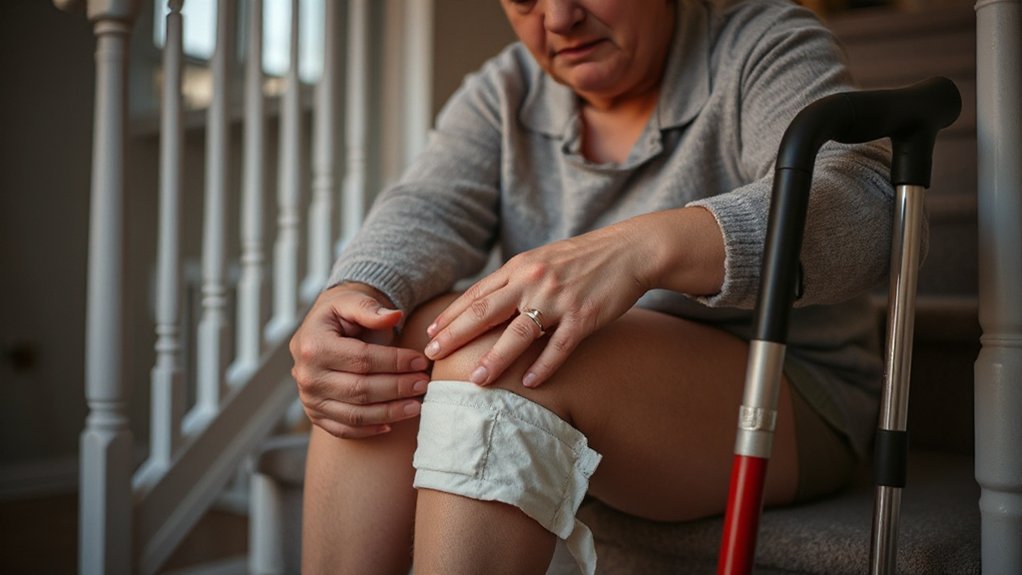
Knee pain got you limping—learn when to seek help and the first fixes to try before things spiral.
You live with a cranky knee; let’s make it manageable. First moves: back off pounding, swap runs for cycling or brisk walks, ice 10–15 minutes, light compression, foot up, then gentle bends and quad sets. Shorten your stride, hinge at hips, avoid deep squats for now. Try acetaminophen or ibuprofen—if safe for you. But if pain explodes, you hear a pop, or swelling balloons fast, that’s urgent. Now, what’s likely causing yours—and what actually helps?

Why does your knee ache like a rusty hinge one day and stab like a tack the next? Because “knee pain” isn’t one thing. Cartilage can fray (osteoarthritis), the kneecap can track poorly (patellofemoral pain), a meniscus can tear and catch, tendons can get overloaded (patellar or quad tendinopathy), and bursae can swell. Crystals can flare (gout or pseudogout). Sometimes it’s not the knee at all—hip arthritis or a pinched nerve can refer pain downward. Inflammation brings heat, swelling, and morning stiffness; mechanical problems cause clicking, giving way, or locking. Map the pain: front, inside, outside, deep behind? Note triggers, sounds, and swell-size changes across a day. Red flags? Fever, a hot ballooned joint, sudden deformity, a pop with inability to bear weight, numbness, or calf swelling—seek urgent care. Otherwise, track patterns for a week, write them down, and be ready to describe them. Clear story, faster answers.
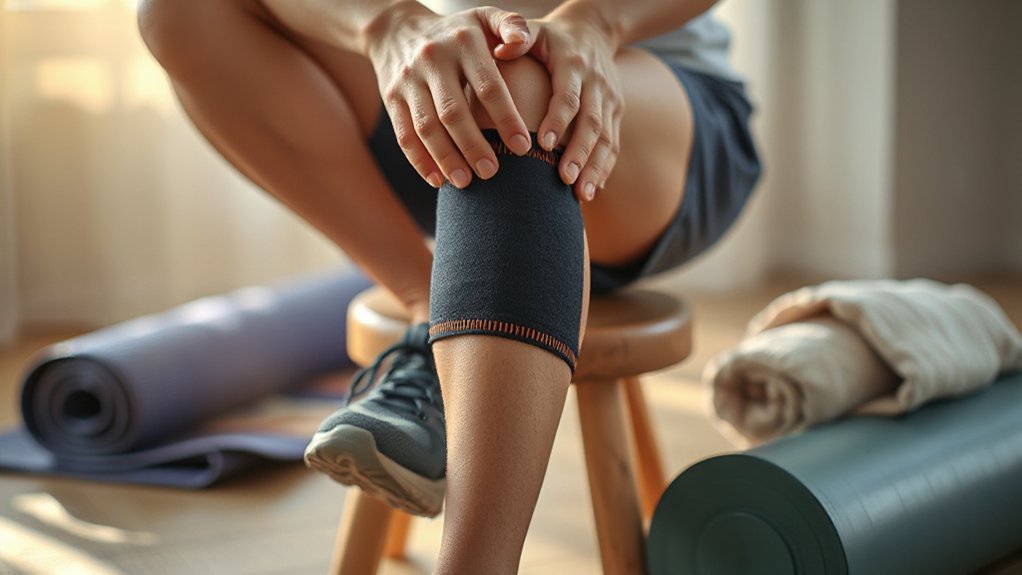
Now that you know what’s grumbling, let’s quiet it with small, smart changes to how you move.
Dial down impact, not your life. Swap runs for walks, or a bike. Shorten your stride, increase cadence; smoother, less knee torque. On hills and stairs, point knees over toes, hinge from hips, and keep shins more vertical. Up with the good, down with the bad—use the rail without ego. Break long days into movement snacks: five minutes every hour to stand, gently bend, and straighten. When you squat, send hips back like you’re closing a car door, knees tracking over second toe. Carry loads close to your body, split the trip if it’s heavy. Choose shoes with cushioning and a mild rocker; retire worn soles. On uneven ground, slow down and look three steps ahead. And yes, listen to pain’s volume knob. Mild? Modify. Sharp or swelling? Stop and pivot.
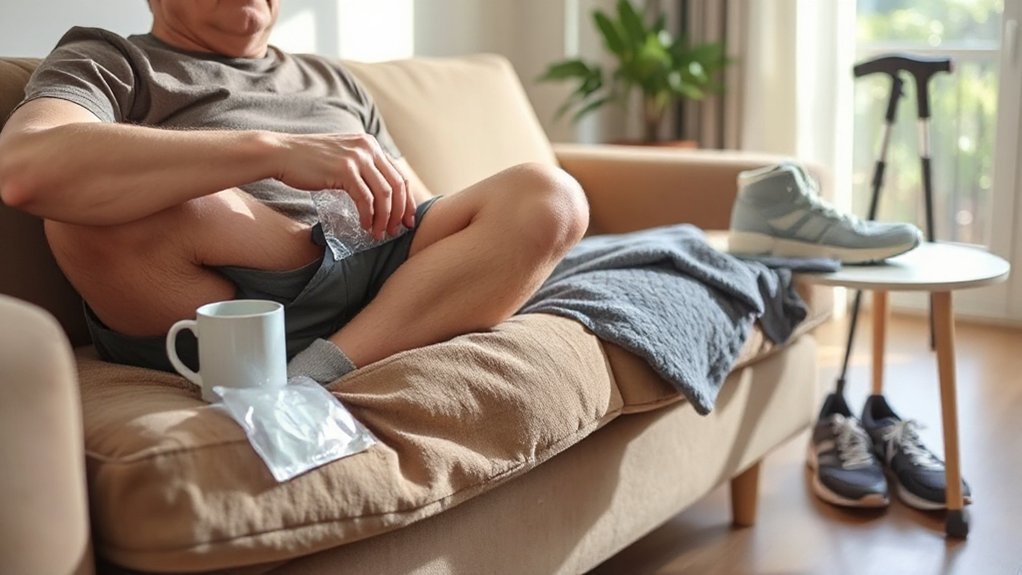
Although it’s tempting to flop on the couch and wait it out, first-line knee care works best when you pair smart calm-down tools with gentle motion. Start simple: ice for fresh flare-ups, heat for stiff, achy mornings. Use a cold pack 10–15 minutes, towel barrier, two to four times a day; switch to warm compress or shower 10–20 minutes when tightness rules the day. Elevate above heart level, light compression sleeve if it feels good, and give the joint relative rest—not zero steps, just dialed-down loads. Then move a little, often. Short walks in the house, painless bends and straightens while seated, ankle pumps to keep fluid moving. Check your pain scale: aim for 0–3 during and after; if it spikes or lingers past an hour, back off. Space your chores, break sitting marathons, and use rails on stairs. Simple, steady, boring. Yes. And very effective. For knees.
Once the knee has calmed a bit with ice, heat, and easy movement, it’s time to teach it to handle life again. Start small, precise, and consistent. Do quad sets: tighten the thigh, hold 5 seconds, repeat 10–15. Add heel slides to regain bend, 10 reps, slow. Straight‑leg raises if it doesn’t hurt, 2 sets of 8–12. Short‑arc quads over a rolled towel, gentle, steady.
Mobility matters. Try supported mini‑squats to a chair, hips back, knees tracking toes, 8–10. Sit‑to‑stands, same cues. Step‑ups onto a low stair, controlled. Calf raises for ankle spring. Bridges and side‑lying leg lifts to power hips, which unload the knee.
Stretch, but don’t yank: hamstrings, calves, quads, 20–30 seconds, 2–3 rounds. Sprinkle in ankle pumps and gentle knee extensions during the day.
Rule of thumb? Mild ache that settles within 24 hours is OK. Sharp pain, swelling, or buckling? Back off, adjust, retry.
Now that you’ve built some strength, let’s add smart support—bracing and tape—to quiet pain and keep you moving. Pick a brace that matches your issue and task: a patellar strap for front-of-knee aches, a hinged sleeve for wobbliness, an unloader for inner-knee arthritis; fit it snug, not tourniquet-tight, then test it on stairs and a squat. For taping, use kinesiology tape for activity or rigid tape for alignment, prep clean dry skin, round the corners, anchor with no stretch, add gentle tension over the sore zone, trial it on a short walk, and ask your PT about patterns like McConnell or patellar-tracking if you want a ready-made map.
Why does the “right” knee support feel so hard to find? Because knees hurt for different reasons, and braces solve different problems. Start by naming your goal: warmth and mild compression, patella guidance, ligament stability, or offloading arthritis pain. For simple swelling or ache, pick a snug neoprene sleeve. For wobbly side-to-side motion, choose a hinged brace. For front-knee pain with stairs, try a patellar-tracking sleeve or a small strap under the kneecap. Bone-on-bone on one side? An unloader brace may help—ask a clinician to fit it.
Measure your thigh and calf, don’t guess. Test comfort walking and sitting, then on stairs. It should feel supportive, not numb. Check skin after 30 minutes. And yes, keep the receipt—returns happen. Break in use gradually, daily.
Even if braces feel bulky, tape can give you nimble support and quick relief—when you use the right kind the right way. Use kinesiology tape for gentle, all-day cueing; use rigid athletic tape for firmer patellar control, like McConnell taping. Prep first: clean, dry skin, no lotion, trim hair, round corners. Test a small strip for itch. For KT, anchor with zero stretch, then lay the middle at about 25–50% stretch along the kneecap or quad, smoothing toward the anchors. For rigid tape, place a lateral-to-medial pull to guide a drifting kneecap. No tingling, blanching, or throbbing—if so, redo. Wear KT 3–5 days; remove with oil, slow and low. Skin sensitive, thin, or on blood thinners? Ask a PT, and keep it simple.
While a cranky knee can hijack your day, smart over‑the‑counter choices can quickly dial down pain and keep you moving. Start simple: acetaminophen for baseline pain, 325–650 mg, every 4–6 hours, within label limits. For swelling or stiffness, reach for an NSAID like ibuprofen or naproxen; take with food, stick to the lowest effective dose, and respect the daily max. Prefer fewer pills? Try a topical first. Diclofenac gel targets inflammation with less whole‑body exposure; rub a measured line along the knee, four times daily.
Cooling and warming options help, too. Menthol creams distract pain receptors, fast. Capsaicin quiets nerve signals, but needs daily use for a couple weeks—yes, the mild burn fades. Lidocaine patches can blunt sharp, surface pain; cut to fit, wear up to 12 hours.
Layer smart. Combine a topical with acetaminophen, or alternate with rest and gentle motion. Track what works, repeat it.
Although you’re trying to “be tough,” a few common missteps can turn a cranky knee into a furious one. You skip the warm‑up, then sprint or squat deep, cold as a popsicle. You chase high‑impact workouts day after day—box jumps, hills, hard courts—with no break. You let form slide: knees cave in, toes point anywhere, heel lifts, spine rounds. You wear worn‑out shoes, or the wrong ones for your foot and surface. You sit for hours, then explode into “weekend warrior” mode. You crank the bike seat too low, pound downhill, or tackle stairs for cardio, fast and sloppy. You stretch only the hamstrings, ignoring quads, calves, hips, and IT band. And yes, you over‑rest—then overdo.
Do the opposite. Warm up 5–10 minutes, then move smart. Pick low‑impact swaps, rotate loads, honor recovery. Nail alignment. Strengthen glutes, quads, calves. Mobilize daily. Upgrade shoes. Pace changes. Consistency beats heroics.
If your knee sends any of these danger signals, hit pause and get help. Sudden, severe pain after a twist or pop? Don’t push through. Hear a loud “pop,” can’t bear weight, or the knee buckles with every step—urgent clinic or ER. Rapid swelling within hours, especially with warmth and tight, shiny skin, can mean bleeding or a torn ligament. Fever plus a red, very tender knee suggests infection—go now. A knee that locks and won’t straighten needs prompt imaging. Numb foot, blue toes, or calf pain and swelling? That’s circulation or clot risk; seek care immediately.
Call your doctor within 24–48 hours if pain wakes you at night, swelling lasts more than three days, or the kneecap feels unstable. Note times, triggers, and meds you took; snap photos of swelling. Until seen: rest, ice 15–20 minutes, compress, elevate, and use crutches if you’re limping. Skip heat, alcohol, and bravado. When in doubt, get checked today.
Your knee can improve, and you can help it. Start with smart swaps—shorter strides, hinge at the hips, trade jumping for cycling or walks. Use RICE: ice 10–15 minutes, light compression, elevation, plus gentle range-of-motion and quad work. OTC pain relievers or topicals, as needed, not heroic doses. Brace or tape if it steadies you. But don’t wait on red flags: a pop, severe pain, rapid swelling, fever, numbness, calf redness, or can’t bear weight.


