Physical Address
304 North Cardinal St.
Dorchester Center, MA 02124
Physical Address
304 North Cardinal St.
Dorchester Center, MA 02124

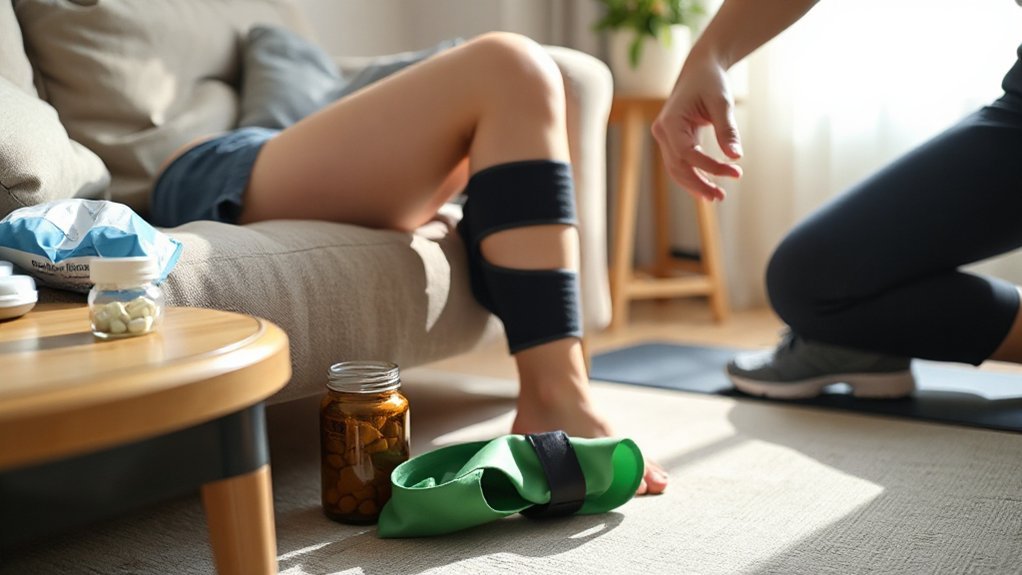
Tackle knee pain with proven treatments, smart exercises, and daily tweaks that protect joints—discover the steps that help most, starting today.
Your knees ache, but you’ve got options: strengthen hips and quads with sit‑to‑stands, bridges, and slow step‑downs; keep fitness with cycling or pool walking; ice after, and use a topical NSAID on flare days. Supportive shoes, a simple brace, steady sleep, and small progressions help, too. Skip heroics, seek a physio early, save surgery for last. Want a concrete, week‑by‑week plan—and the key red flags to watch?
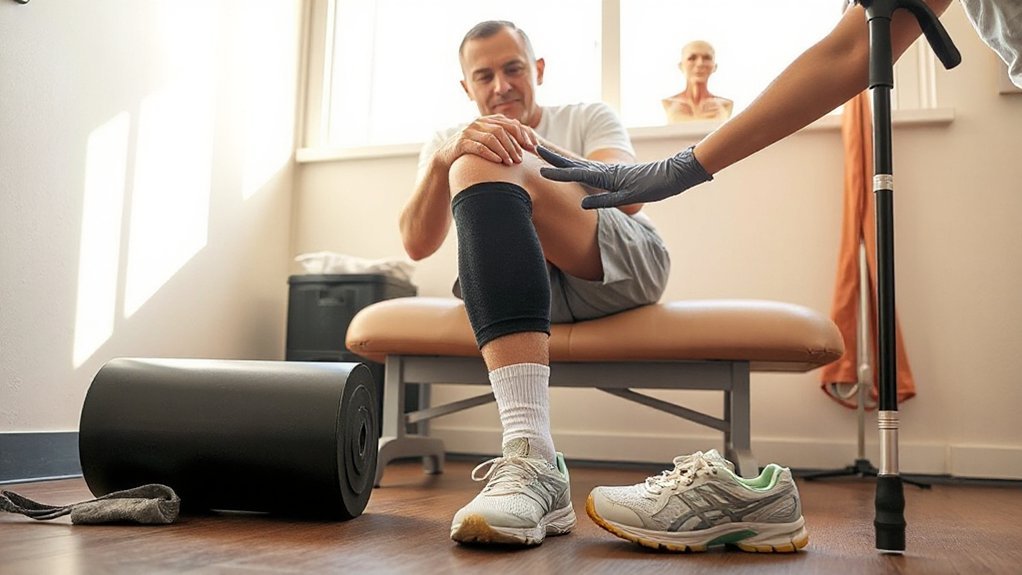
Starting with the basics saves knees, time, and worry. Begin by mapping the pain: front of the knee often points to kneecap tracking or tendon irritation; inside pain may hint at meniscus wear; outside pain can be IT band friction; deep, diffuse ache suggests arthritis. Note the moment it started—sudden twist, slow creep, or an awkward squat you now regret. Track swelling, clicks, pops, grinding, and that shaky “giving way” feeling. Patterns matter: stairs worse than flat ground, mornings stiff but easing, or pain after sitting.
Watch for red flags. Can’t bear weight? Knee locks and won’t straighten? Big, hot swelling with fever, or a red, shiny knee—urgent. A blow that bends the knee sideways, a loud pop with immediate puffiness, or a calf that’s swollen and tender—get checked quickly. Night pain that wakes you, unexplained weight loss, or a history of cancer? Don’t wait; call your clinician.
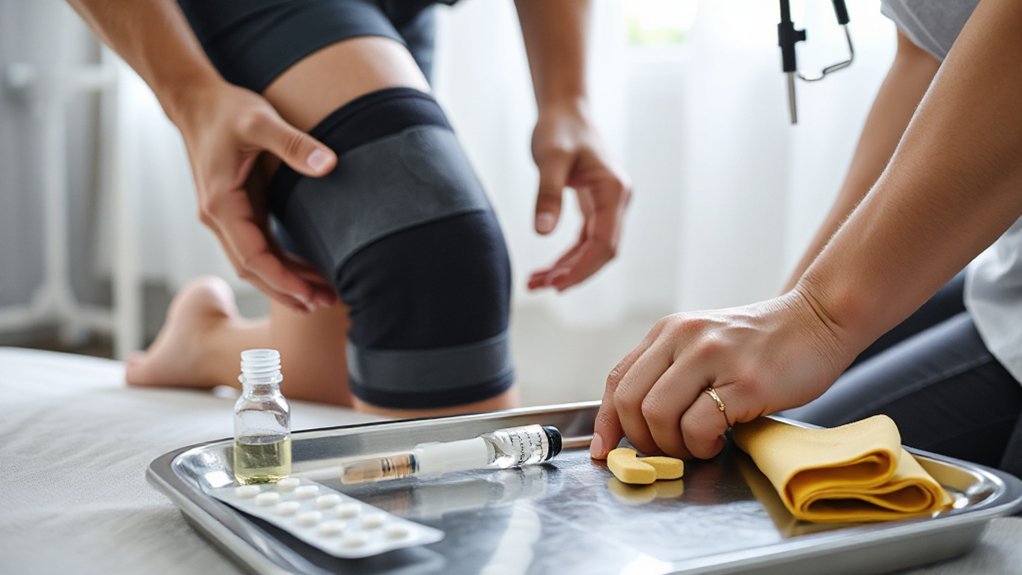
When pain maps to a likely cause, you can act with a plan: build strength, support the joint, calm inflammation, and, if needed, use targeted shots.
Start with physical therapy. You’ll rebuild quadriceps and glute strength, improve hip mobility. Think sit-to-stands, step-downs, bridges, calf raises, cycling. Train 2–3 days a week, progress slowly, track pain 0–10; aim for acceptable soreness, not spikes.
Add support when needed. A hinged brace steadies ligament sprains, a patellar strap may calm tendinopathy, and a medial unloader can ease knee osteoarthritis. Tape helps for short bouts.
Medications? Use minimum that works. Start with topical diclofenac gel, then short NSAID courses with food; use acetaminophen on pain-only days. Ice after activity, heat to warm up.
Injections fit select cases. Corticosteroids for hot, swollen flares; hyaluronic acid for “gritty” OA; platelet-rich plasma for some tendons. Discuss timing, risks, and realistic goals—weeks to months, not miracles.

Sometimes, surgery is the right move—after smart rehab, bracing, and injections have done their part and your knee still rules your life. It’s appropriate when pain limits daily tasks, you’ve failed 3–6 months of care, you’ve got night pain, instability, deformity, or imaging shows advanced arthritis or a repairable tear. Arthroscopy helps only with true mechanical locking; otherwise, it’s overhyped. Big hitters: osteotomy for younger, malaligned knees; partial or total knee replacement for end-stage wear.
How to prepare? Pick a high-volume surgeon, ask about complication rates, implant choice, and recovery timeline. Optimize health: quit nicotine, manage diabetes, check blood pressure, treat skin issues, and clear dental infections. Review meds—often you’ll pause blood thinners and most NSAIDs. Plan clot prevention and anesthesia.
Set up home: sturdy handrails, non-slip bath mat, raised toilet seat, ice packs, and prepped meals. Arrange help, rides, and time off. No heroics, just smart steps.
Surgery or no surgery, your knee needs a daily plan that feeds it the right stress, not zero stress. Start with 5–10 minutes of easy motion—march in place, gentle knee bends, ankle pumps. Then low‑impact cardio: 20–30 minutes, most days. Flat walking, cycling with a higher seat, elliptical, or pool jogging all work. Keep pain at 3/10 or less, and make sure it settles by the next day.
Strength next, 2–3 days a week. Prioritize quads, glutes, calves, hamstrings. Do chair sit‑to‑stands, mini‑squats to a box, step‑backs, bridges, and heel raises. Two sets of 8–12, slow on the way down. Mobility daily: heel slides, gentle knee extensions, calf and quad stretches, 30 seconds each.
Finish with easy two‑minute walk.
Though workouts do the heavy lifting, your everyday choices quietly decide how your knees feel by sunset. Start with weight: every 10 pounds lost can take 30–40 pounds of force off each step. Aim for steady, not heroic—200–300 fewer calories daily, protein at each meal, fiber, and water. Choose plates that are half vegetables, a quarter lean protein, a quarter smart carbs. Simple, repeatable, boring-in-a-good-way.
Next, footwear. Pick supportive shoes with firm heel counters, cushioned midsoles, and slight rocker soles if stairs sting. Replace worn-out treads at 300–500 miles. Use over-the-counter arch supports if feet roll inward; see a pro if pain climbs.
Then, recovery. Guard sleep like therapy—7–9 hours. After activity, do 5–10 minutes of gentle mobility, then ice 10–15 minutes if sore. Elevate, compression wrap, walks, not couch marathons. Schedule rest days, plan step-down weeks, and listen: sharp pain means stop, adjust, and try smarter tomorrow.
You’ve got options, and they work. Train smart: sit-to-stands, bridges, controlled step-downs, three days a week. Add gentle cardio—cycling or pool walking—to build fitness without pounding. After activity, ice 10–15 minutes; on flare days, use a topical NSAID. Brace or tape if the kneecap grouches. Wear supportive shoes, sleep well, progress slowly, and trim extra weight. Call a physio early, not last. And surgery? Only when pain and function still block life, despite real rehab.


