Physical Address
304 North Cardinal St.
Dorchester Center, MA 02124
Physical Address
304 North Cardinal St.
Dorchester Center, MA 02124

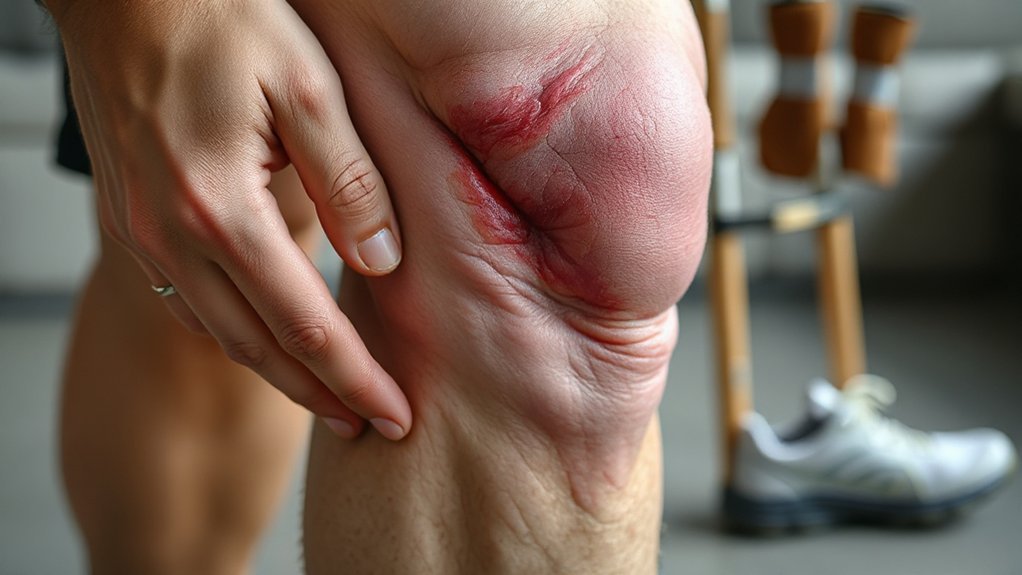
Urgent knee pain clues—twist-and-pop, swelling, redness, numbness, nighttime pain—signal more than soreness; learn when to seek care before damage worsens.
Knee pain isn’t “just soreness” when it hits after a twist and pop, swells fast, looks crooked, locks or gives way, or you can’t bear weight. Red, hot, or feverish? Worrisome. Numb toes, a cold foot, or calf swelling? Stop, protect the knee, ice and elevate, note when it started, and head to urgent care or the ER if severe. Night-waking pain counts, too. Want the quick checklist—and what to do next?
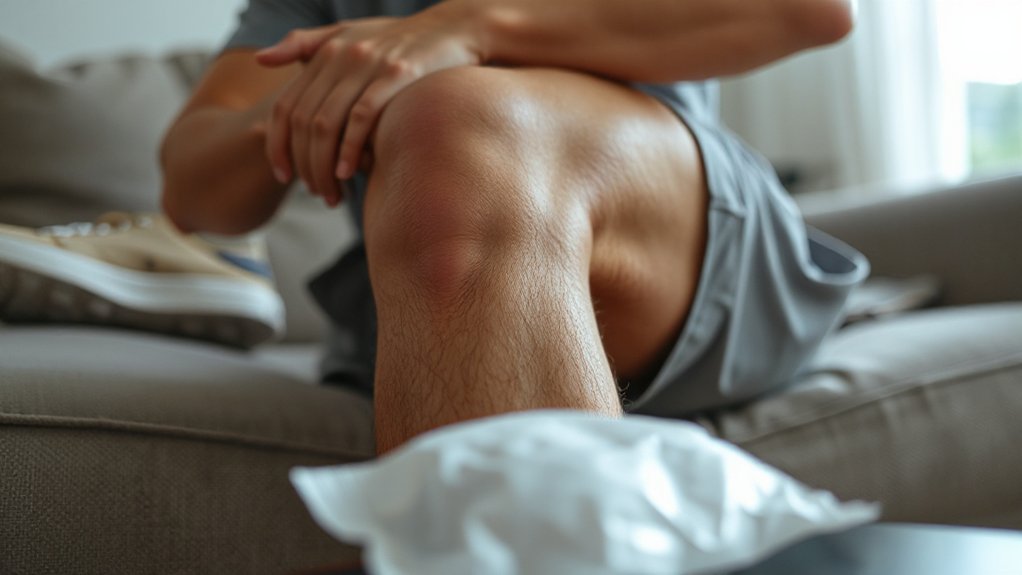
When your knee balloons up fast or the pain hits like a switch, don’t “walk it off”—that’s a red flag. Sudden swelling means fluid or blood is filling the joint. It can follow a twist, a fall, even a misstep on the stairs. You feel tightness, heat, stiffness, and your knee won’t bend or straighten without protest.
Stop the activity, sit, and protect the leg. Ice 15–20 minutes, compress with an elastic wrap, elevate above your heart. If you can’t put weight on it, need two hands to lift your leg, or swelling appears within hours, seek same-day care. Redness with fever? Go now.
Note what helps and what doesn’t. Mark the swelling’s edge with a pen, compare both knees, snap a quick photo. Avoid heavy braces, deep squats, and pain-masking workouts. Use acetaminophen or an NSAID if safe. Better rule: if it’s suddenly worse, you get checked promptly.
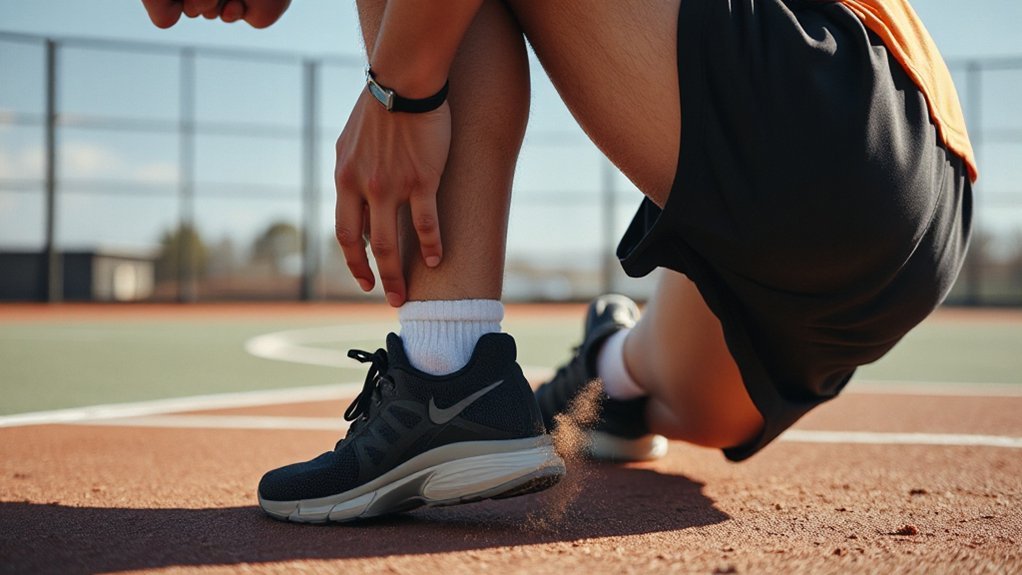
When you hear or feel a pop in your knee during a cut, twist, or awkward landing, think common culprits: ACL tear, meniscus tear, patellar subluxation, or an MCL sprain. Immediate symptoms to note: sharp pain, a giving-way sensation, rapid swelling within 1–2 hours, trouble bearing weight, loss of motion, and—odd but telling—feeling like your knee is “stuck” or catches. Act fast: stop the activity, protect and ice the joint, use crutches if needed, and seek urgent evaluation today (ER or sports medicine), because early imaging and bracing can limit damage and speed your comeback—no heroics required.
Suddenly hear a sharp pop in your knee? That sound often comes from structures that resist twist, stop, or load. Pivot hard and feel a pop? Think ACL, the anterior cruciate ligament, especially during cutting, decelerating, or landing from a jump. Drop into a deep squat, twist, and pop—meniscus, a cartilage ring, can tear along the rim. Take a hit to the outside of your knee, pop—MCL sprain. To the inside—LCL. Knee slides forward against a dashboard or turf—PCL. Knee cap shifts sideways with a pop—patellar dislocation. Explode into a jump, or miss a step, and hear a gunshot-like pop—patellar or quadriceps tendon rupture. Sometimes, a loose cartilage fragment, an osteochondral injury, snaps. Weekend warrior or pro, the mechanics are similar in every sport.
Even if the pop startled you, focus on what your knee tells you in the next few minutes. Stop, sit, breathe, and scan. Where’s the pain—inside line, outside line, front, or deep behind the kneecap? Try a gentle bend and straighten; note any sharp catch, click, or grinding. Can you bear weight evenly, or does the knee buckle, wobble, or feel “loose”? Watch for swelling that rises fast like bread dough, or slowly over an hour. Warmth, flush, and tightness matter. Press lightly around the joint line, patellar tendon, and hamstrings—tender zones hint at structures involved. Check for bruising, numb spots, or tingling. Compare to the other knee. Finally, test a careful single-leg stand. Steady? Or shaky, hesitant, guarded? Note noises with each move.
Heard a clear pop at the moment it happened? That sound can mean a torn ACL, meniscus, or patellar tendon, sometimes even a fracture. Stop right away, don’t “walk it off.” Sit, protect the knee, and keep weight off it. Use crutches if you have them. Ice 15–20 minutes, compress with an elastic wrap, and elevate above your heart.
Seek urgent evaluation today. Go to the ER if you can’t bear weight, the knee looks deformed, swelling balloons within an hour, or you feel numbness or cold foot—those are red flags. Otherwise, urgent care or sports medicine within 24–48 hours works.
Expect an exam, X‑rays to check bone, and possibly an MRI or ultrasound. Bring the play-by-play. Details help, and they speed care. Now.
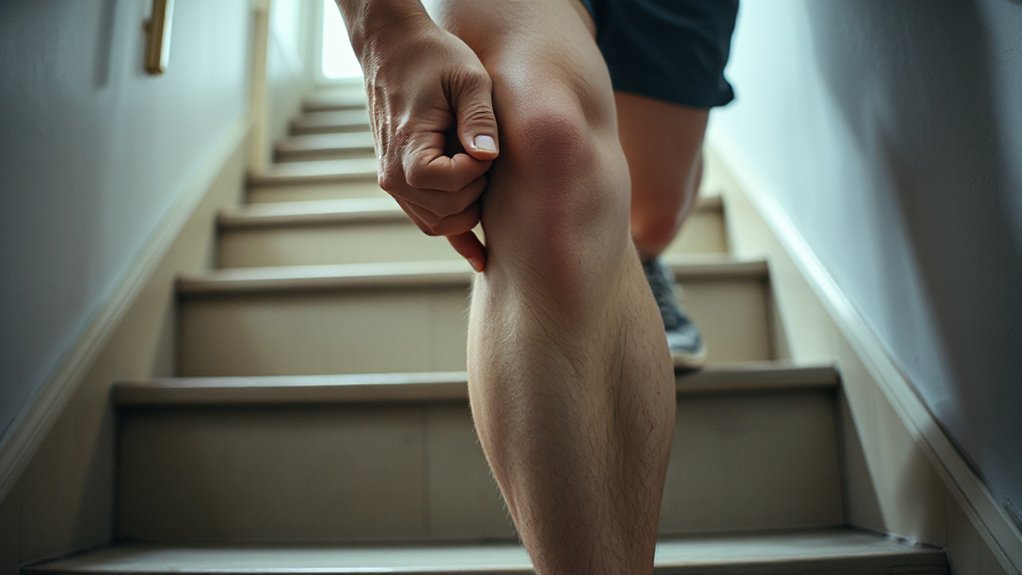
When your knee locks, catches, or gives way, it’s more than annoying—it’s a red flag your joint isn’t tracking smoothly or something’s blocking its motion. These episodes often point to a meniscal tear, loose cartilage, or an unstable ligament. You might feel a hard stop, a click, then a wobble that makes you grab a wall. That’s your cue: take it seriously, not personally.
Until you’re seen, avoid twisting, fast direction changes, and impact. Use a brace or cane for stability, and keep steps small, deliberate.
If your knee suddenly looks crooked, bulges on one side, or your kneecap sits off to the side like it’s “escaped,” treat it as an urgent red flag. Stop activity, brace or splint if you can, ice 15–20 minutes, and get prompt care—ER for obvious deformity; same-day clinic or sports med if the kneecap slides or pops. Watch for patella tracking issues too: kneecap drifting inward on squats, grinding under the kneecap, or a pulling sensation—use taping, quad sets, and supportive shoes today, then book an evaluation to check alignment and rule out dislocation.
Although it can be shocking, a sudden knee deformity—kneecap shifted, leg angling oddly, or a new lump where it shouldn’t be—is an emergency, not a wait-and-see moment. Stop right away, protect the knee, and call emergency care if your foot feels numb, cold, or blue. Don’t try to straighten it; splint it as found, ice it through a towel, and elevate. Remove tight clothing, avoid food or drink, and head to the ER for X‑rays and an exam. Why? Deformity often means dislocation, fracture, or a torn tendon—conditions that can threaten blood flow and nerves.
Despite how subtle it can look, patella tracking trouble is a real culprit behind that front-of-knee ache and the odd sideways pull you notice in the mirror. You might see the kneecap drift outward when you squat, climb stairs, or stand from the couch—hello, movie-night test. Pain under the patella, popping, a catching “nope” feeling? Classic. Causes include weak hip abductors, tight IT band, or a shallow groove. Act now: reduce deep knee bends, ice after activity, and switch to flat, supportive shoes. Try mini-squats, clamshells, straight-leg raises, and taping or a patella-stabilizing brace. If swelling, repeated instability, or a visible shift persists, book an evaluation. An exam, X-ray, or MRI can rule out cartilage damage. Don’t wait; tracking improves with targeted work, daily.
When knee pain stays sharp and stubborn for more than a few days, treat it as a red flag, not a fitness badge. Pain that won’t back off after rest, ice, and a weekend off isn’t “normal soreness.” It may signal a torn meniscus, a stress fracture, or ligament damage. If simple moves—stairs, squats, even walking—spark jolts of pain, it’s time to act, not wait.
Sharp knee pain that lingers isn’t grit—it’s a red flag. Act, don’t wait.
You’re not quitting; you’re protecting the joint. Fix it sooner, return stronger. That’s the smart play today.
If your knee turns red, feels hot, or you spike a fever, treat it like a siren, not a shrug. Heat and redness signal active inflammation; add fever, and infection jumps to the top of the list—cellulitis, septic bursitis, or septic arthritis. That’s joint-threatening, even life-threatening.
Check quickly: compare both knees in a mirror, note color and swelling, take your temperature. Over 100.4°F? Chills? Rapid onset after a cut, scrape, injection, or recent surgery? Call your doctor now or head to urgent care; if pain is severe and you can’t bear weight, go to the ER.
Until you’re seen, stop heavy activity, keep the leg gently elevated, and avoid heat. You can use a cool pack 10–15 minutes to reduce throbbing, but don’t delay evaluation. If you have diabetes, immune suppression, or gout, act faster. Red streaks creeping up the leg, or worsening within hours? That’s go-now. Urgent.
Check fast, act fast:
If symptoms fade within minutes after easing pressure, monitor. But if they persist, worsen, or come and go, get medical evaluation soon. Today.
Sudden knee pain that makes you limp or grab the wall isn’t normal soreness—it’s a red flag. If you can’t put weight on that leg, or your knee buckles when you try, think structural injury: ligament tear, meniscus tear, patellar dislocation, even a fracture or joint infection. Sharp pop at injury? Rapid swelling? A knee that looks deformed or won’t straighten? Those are urgent clues.
What should you do? Stop the activity, sit, and protect the knee. Don’t “walk it off.” Use crutches or a friend’s arm, elevate, and ice 15–20 minutes on, 20–30 off. Wrap with a snug elastic bandage, toes warm. If you can’t bear weight after a rest, get same-day evaluation at urgent care or the ER. X‑rays check bones; an exam or MRI checks soft tissue. Take acetaminophen if needed, skip alcohol, and avoid heat or massage. Your job: protect first, diagnose fast.
Not every knee scare involves giving out; sometimes the warning is the pain that just won’t quit. If your knee aches for weeks, keeps you up at night, or comes with calf swelling, don’t shrug it off. Night pain often signals inflammation inside the joint, a stress fracture, or an infection—rare, but serious. Calf swelling, warmth, or tenderness raises a different flag: a possible blood clot. That’s an urgent, same‑day check.
Here’s how to respond—calm, quick, and smart:
Bottom line: listen to your knee. If you feel a pop, see a deformity, swell fast, can’t bear weight, lock or give way, or have redness, fever, calf swelling, numbness, or a cold foot—stop. Protect it, ice 15–20 minutes, elevate, note when it started. Try gentle rest, not heroics. If pain’s severe, wakes you, or keeps worsening, head to urgent care or the ER. Quick check now beats a long layoff later. Your move, wisely.


